Some cities announce themselves with a skyline. Cuenca does it with a precipice. Stone façades rise from the rock, timber balconies project over empty space, and a slender bridge draws a line across the Huécar gorge. The setting is spectacular, but the real pleasure is discovering how much fits within it: a medieval town, an unexpectedly rich artistic life and streets that reward a slower pace.
For a Spanish escape built around architecture and culture, this small city in Castilla-La Mancha deserves more than a passing photograph. In 2026, the Museo de Arte Abstracto Español marks sixty years since its foundation. That anniversary offers a particularly good reason to look beyond the famous balconies and spend time with the creative character behind them.
A town shaped by its landscape
Cuenca’s historic centre occupies a steep site between the gorges of the Júcar and Huécar. Its defensive origins help explain the compact streets and elevated position; its appeal today comes from the relationship between those streets, their buildings and the landscape beyond.
The historic walled town joined UNESCO’s World Heritage List in 1996. The designation recognises both its surviving medieval urban character and the way the built environment belongs to its natural setting. Here, the view is part of the architecture. A turn between buildings can reveal open countryside, while a distant perspective makes an entire row of houses seem like an extension of the cliff.
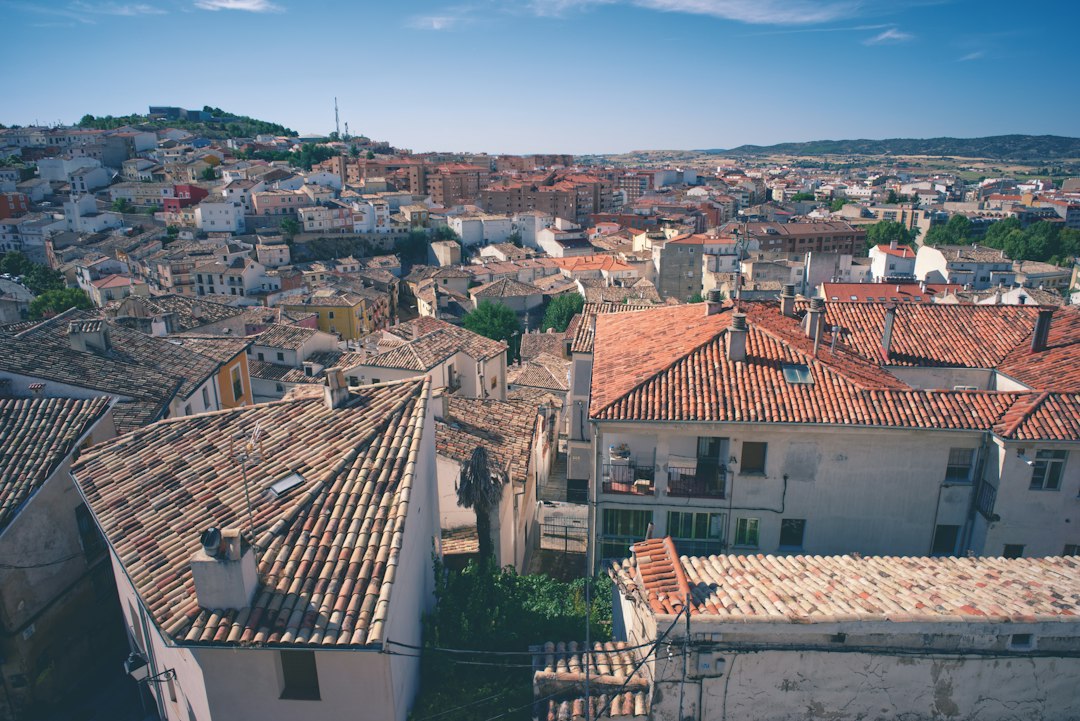
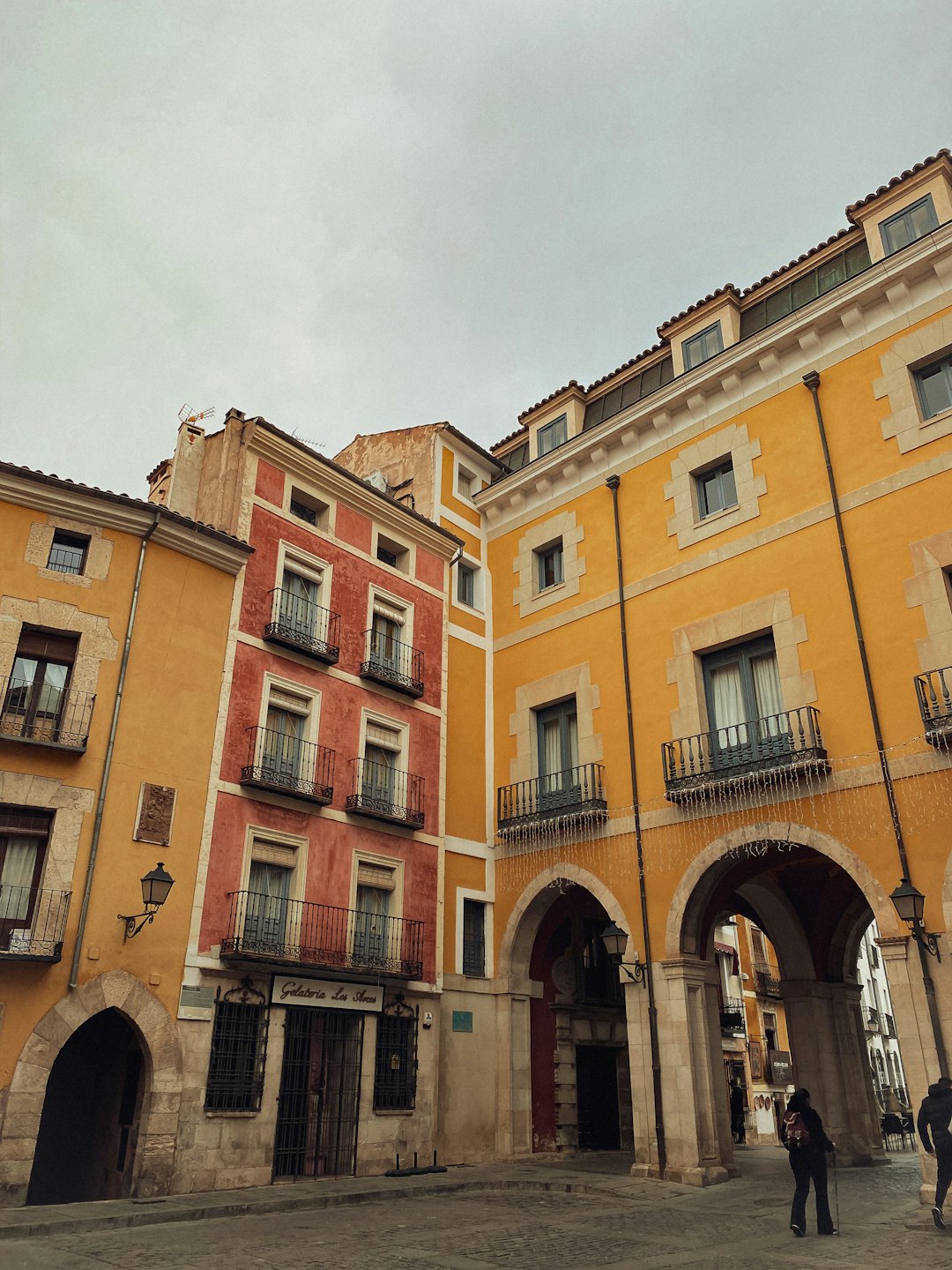
Look closely at the everyday fabric as well as the monuments. Terracotta roofs overlap at different levels. Pale plaster, ochre walls and darker timber break up the stone. The changing heights and narrow façades make the town rewarding to study on foot, with time to pause rather than simply move between named sights.
The Hanging Houses, seen properly
The Casas Colgadas are Cuenca’s defining image. Their wooden balconies reach out above the Huécar, turning domestic architecture into something wonderfully improbable. The surviving group comprises three historic houses; two have accommodated the Museo de Arte Abstracto Español since 1966.
The buildings have a layered history, including a major restoration during the 1960s. Their architectural details bring together different periods: carved and painted beams, decorative plasterwork and Renaissance elements. The interest lies in that accumulation as much as in the dramatic exterior.
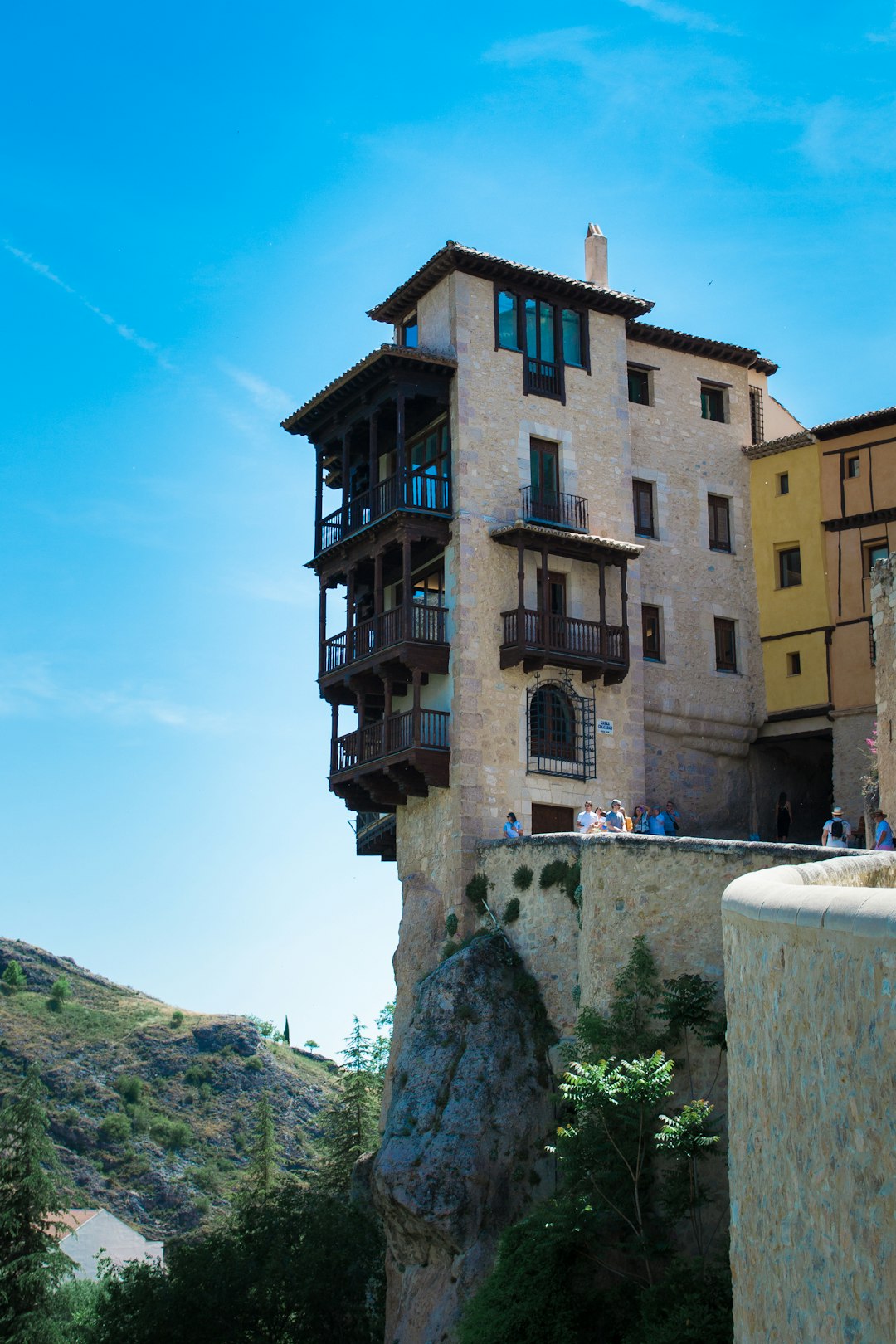
Give the houses two readings. First, see them as part of the cliffside townscape. Then approach them at street level, where the scale becomes more intimate and the balcony construction more tangible. The shift between those perspectives is one of Cuenca’s great pleasures.
Modern art in an extraordinary home
Fernando Zóbel’s initiative led to the museum opening on 1 July 1966. He donated his collection to the Fundación Juan March in 1980, and the institution has continued to develop it. Its focus on Spanish abstract painting and sculpture introduces another way of seeing the city: through form, material, colour and space.
Artists represented in the collection include Antonio Saura, Gerardo Rueda, Gustavo Torner, Eusebio Sempere and Zóbel himself. Rather than treating the museum as a quick detour from the balconies, make it an anchor for the visit. The meeting of experimental art and a historic domestic setting is central to what makes Cuenca distinctive.
There is a wider artistic circuit, too. Espacio Torner occupies the former church of San Pablo, while the Fundación Antonio Pérez is housed in a former Carmelite convent. These places extend the conversation between old buildings and modern work. Choose one additional collection if you want to keep the day spacious; trying to absorb everything can leave little room for the city itself.
Across the gorge and back to the square
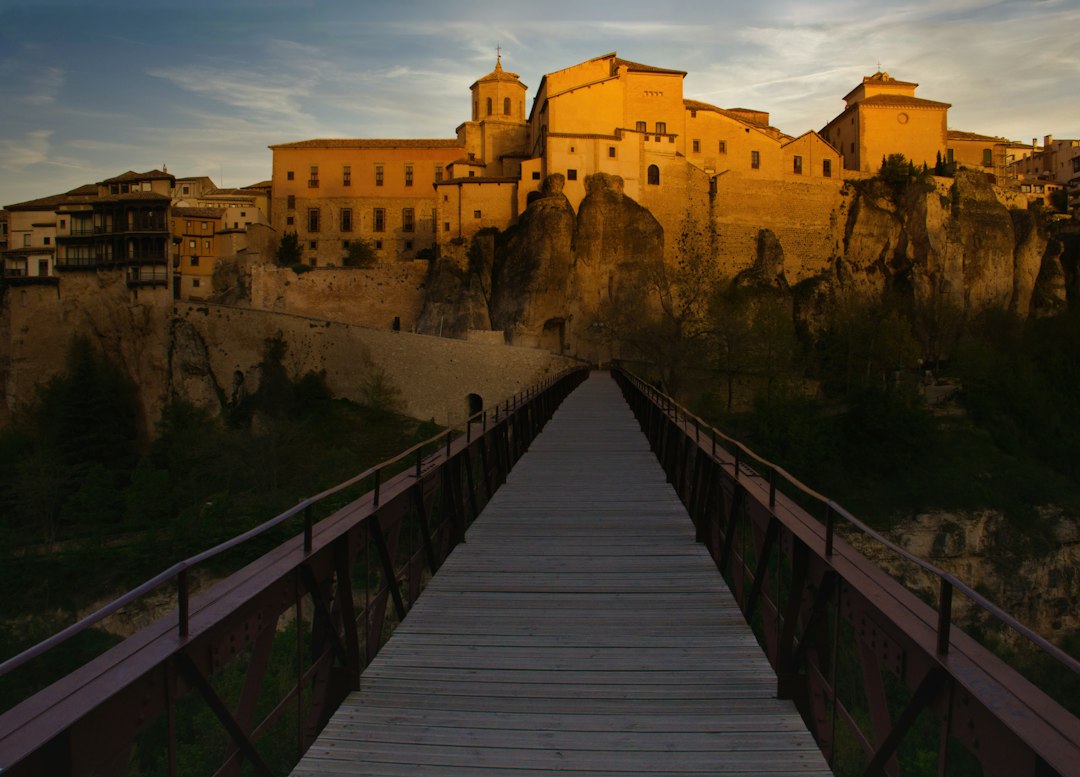
The present San Pablo bridge opened in 1903, replacing an earlier stone crossing. Its iron structure offers a striking counterpoint to the rock and masonry around it. This is the place to appreciate the wider composition: bridge, gorge and houses held together in a single view.
Back in the old town, Plaza Mayor provides a natural point of orientation. The cathedral and town hall give the square its architectural presence, while surrounding streets lead towards the Hanging Houses and upwards towards the castle area. The town hall’s arches make a memorable threshold, framed by warm-coloured façades and balconies.
Make room for an unhurried visit
Build your time around three elements: the gorge-side views, a substantial museum visit and a walk through the upper town. Leave a generous pause for lunch rather than filling every hour. Cuenca’s steep terrain means that distance on a map tells only part of the story; comfortable shoes and a route suited to your mobility will make a difference.
Confirm museum opening arrangements for your chosen date, particularly around public holidays. For photography, return to a favourite viewpoint as the light changes. For the most satisfying visit, give equal attention to the monumental panorama and the small details along the way. Cuenca is a city to look at carefully.
Planning a visit to Cuenca? Enquire with Diana.
Details checked 1 November 2026.
 English