
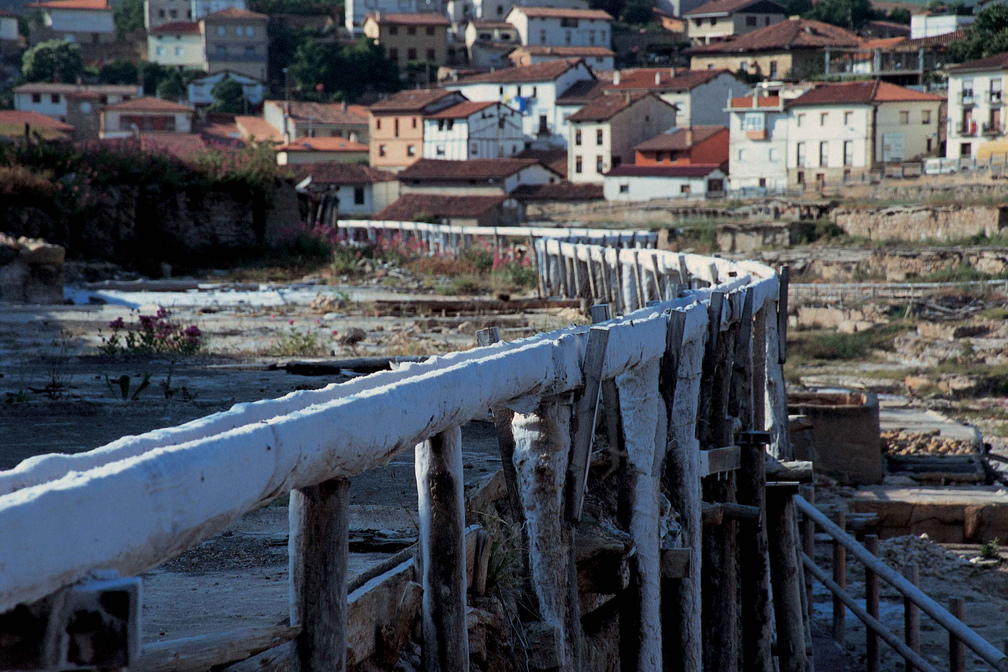
Opening photograph: Fundacionvallesalado / Wikimedia Commons, CC BY-SA 4.0. Archival photograph.
A white line curves through the valley towards a cluster of red-roofed houses. Look closer and it becomes something wonderfully practical: a wooden channel carrying salty water. At Salinas de Añana, in Álava, the most revealing way to read the landscape is to follow that line. Springs, channels, reservoirs and terraces belong to a single system, shaped around the movement of brine.
This is architecture with a job to do. Its beauty lies in the relationship between modest materials and difficult ground: timber lifted above stone, shallow platforms fitted into a slope, water finding a carefully maintained gradient. For a Basque Country journey with room for a quieter kind of spectacle, Añana offers an absorbing encounter with the ingenuity of working landscapes.
Follow the water
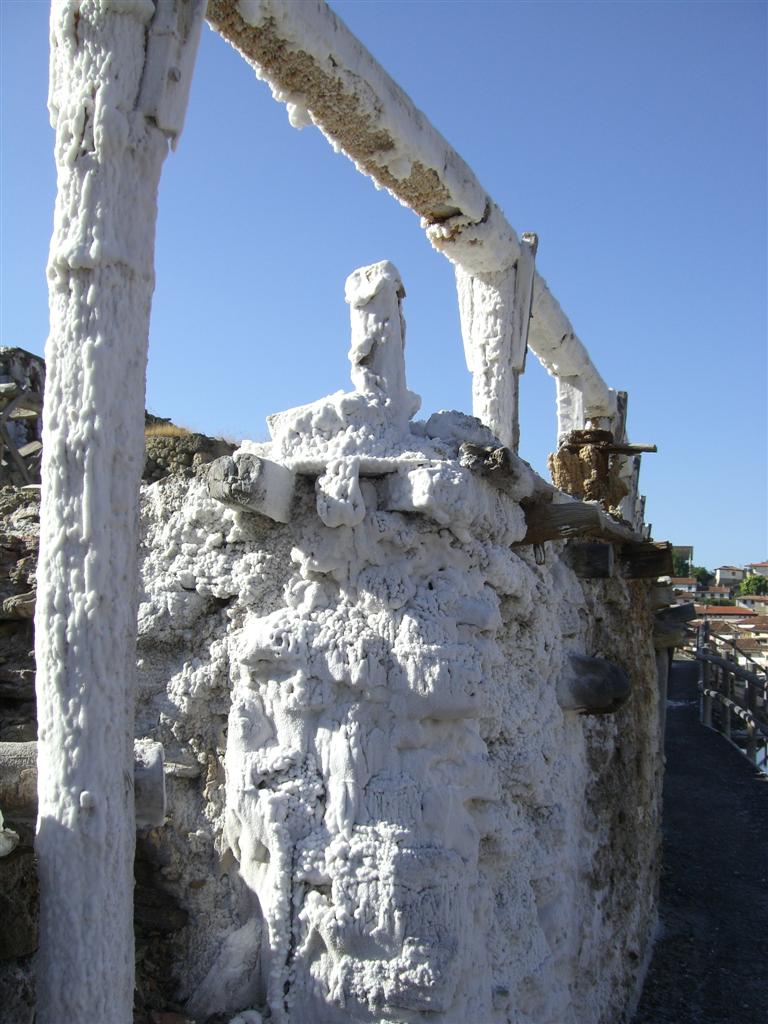
The springs lie at the southern head of the valley. From there, hollowed pine trunks carry the brine downhill, their course supported wherever necessary to preserve the fall. The foundation that manages Valle Salado describes a network extending for more than four kilometres. Gravity does the travelling; the skill lies in directing it.
There is a social history inside this hydraulic one. Water was a limited resource shared among many owners, and rights to it were organised by time. Salt workers used clay to interrupt a main channel and turn the flow towards their own reservoirs and evaporation platforms during an allotted period. The foundation traces written evidence of water-use rights back more than 1,200 years. What looks like a simple wooden gutter was also part of an intricate arrangement between neighbours.
A landscape built from below
The terraces become more interesting when you look beneath them. Stone retaining walls provide a base for timber frameworks, which hold level evaporation surfaces above the uneven valley. Salt workers developed and maintained these structures themselves, using stone, wood and clay. Their practical knowledge gave the place its distinctive shape.
The shallow platforms are called eras. Brine is spread over them and the water evaporates naturally, leaving salt to be collected. Groups of platforms form working units that adjust to the contours, producing the stepped outlines seen across the valley. Beneath some platforms, sheltered spaces serve as stores. The structure is productive from top to bottom.
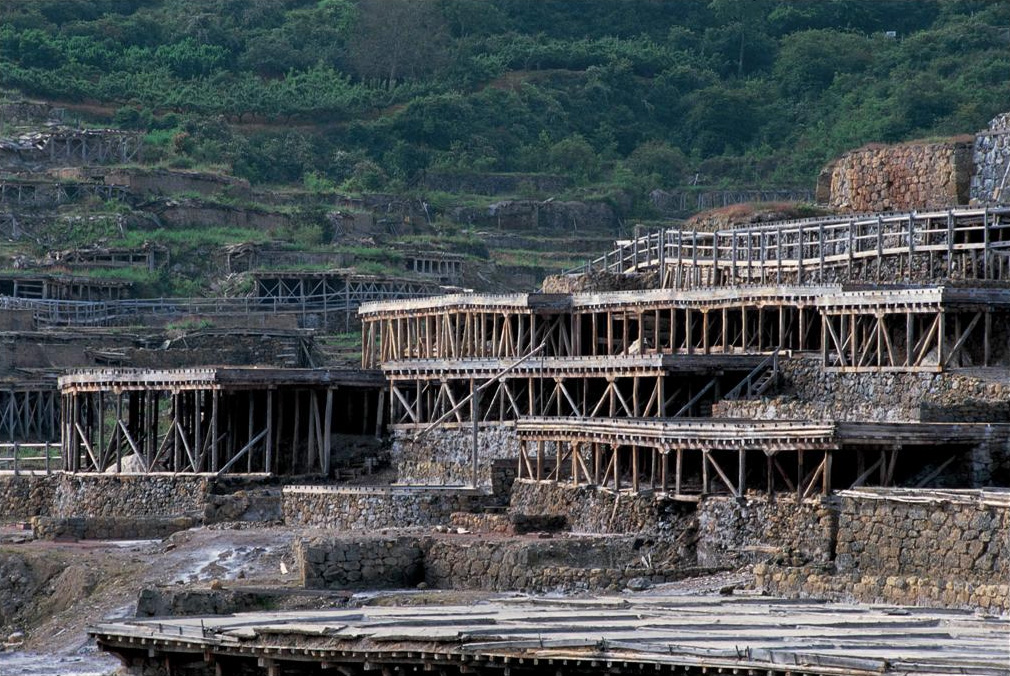
This relationship between building and task gives Añana a particular appeal for anyone interested in design. The view is not only a pattern of pale rectangles. It is a series of decisions about support, slope, circulation and storage, made visible at landscape scale.
Salt, time and the seasons
Salt helped sustain settlements here over thousands of years. Before refrigeration, preserving food gave it a significance far beyond the everyday seasoning we know now. Añana’s natural brine springs supported a community whose fortunes and working methods changed across successive historical periods.
Today, visitors encounter a cultural landscape undergoing recovery alongside continuing salt production. That matters to the experience: this is a place of maintenance and skilled work, with a history that remains legible in its materials. The photographs here show the channels and structures at different points in that long story, rather than presenting a newly completed attraction.
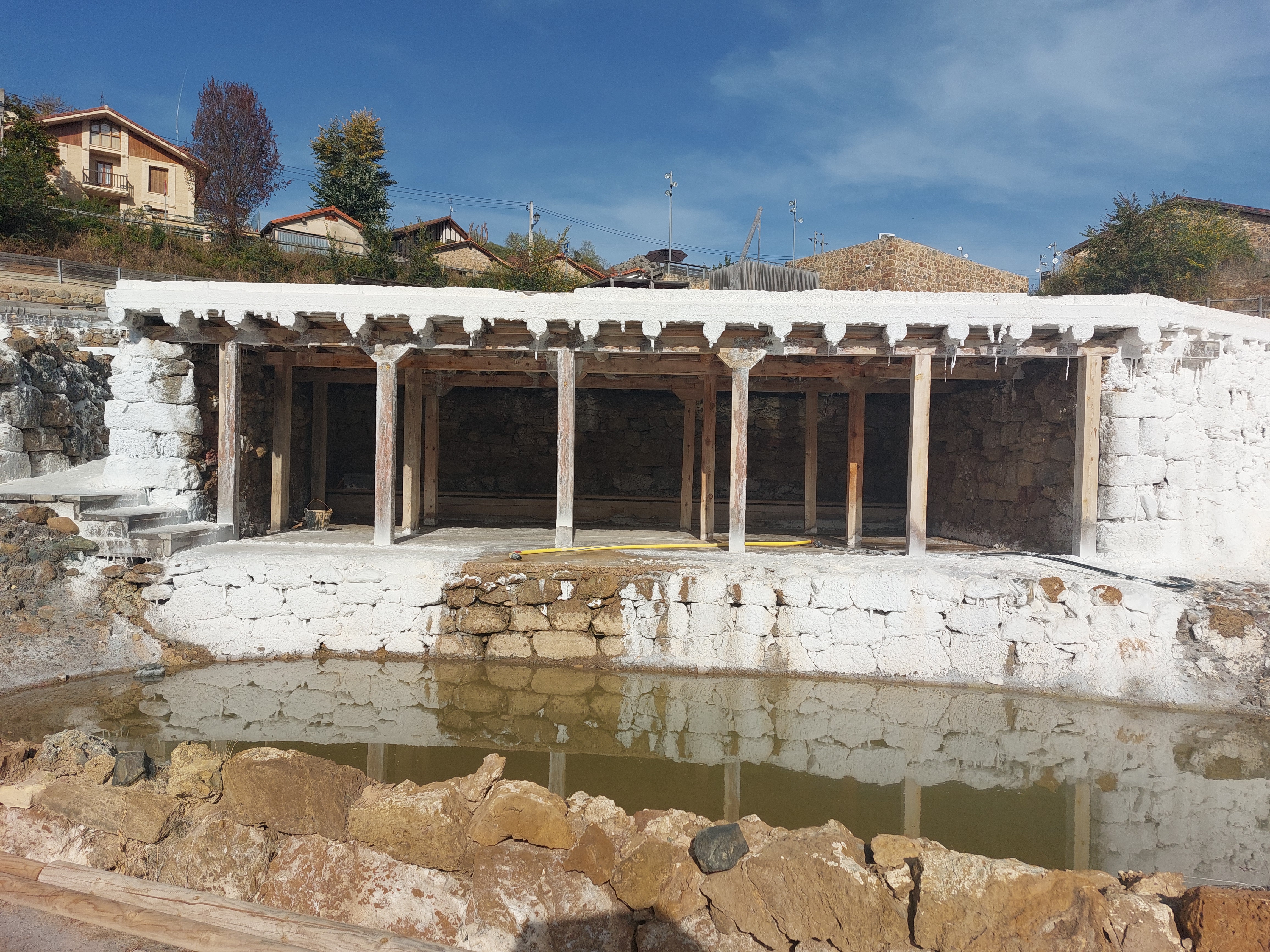
A November visit calls for a different expectation from a summer one. The foundation identifies May to September as the main production months. The quieter season lends itself to understanding the system and the restoration, without expecting the terraces to be busy with harvesting.
Planning a visit
The introductory guided Valle Salado visit is offered throughout the year and lasts about an hour. Advance reservation is required; visitors are asked to reach the visitor centre fifteen minutes before their tour. The outdoor salt spa is a seasonal addition offered from April to October, so it is not part of a November plan. Current tour availability should be confirmed for the chosen date.
For help planning an Añana visit as part of a Spain itinerary, contact Diana on WhatsApp.
Details checked 22 November 2026.
 English