
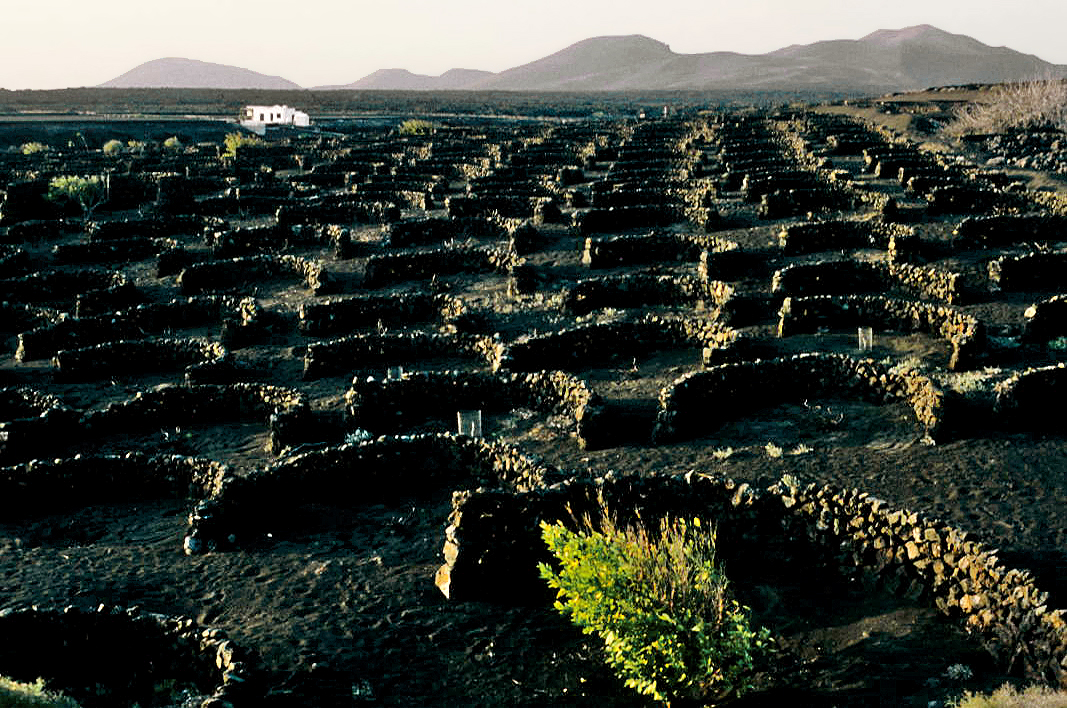
In a photograph taken in January 1993, the light catches the top course of each stone wall in La Geria. The hollows behind them are almost black. A small white house gives the eye a measure of the distance; what looks at first like a handful of crescents turns out to be a field full of them. Down at the front of the frame there is a patch of green. That is the scale at which this landscape was designed: one vine, with just enough shelter to grow.
Opening photograph: La Geria, January 1993. LBM1948, CC BY-SA 4.0.
A vineyard built downwards
In most vineyards, the rows tell you where to look for the fruit. Here it is easy to look straight over the plants. The eruptions of 1730–36 left parts of Lanzarote’s agricultural land buried under loose volcanic material. To plant again, growers dug through the black gravel, known on the island as rofe, until they reached soil. The excavation gave the vine somewhere to put down roots. Leaving the gravel in place around it helped the ground keep its moisture.
Wind called for a different piece of engineering. Growers stacked stones along the exposed side of each hollow. Seen from above, the curve is what gives La Geria its signature. Seen from the height of the plant, the useful thing about the wall is how little wall is needed: the vine already sits below the surrounding ground. The black gravel, the hollow and the raised lip of stone each do a different job.
Look for the straight lines, too
A second photograph from that same January is a good antidote to the idea that every vine on Lanzarote occupies a perfect circle. Two long walls run away from the camera, with short crosswalls dividing the space between them. Bare canes stretch sideways along the bottom of these compartments. Without leaves to distract the eye, it is possible to trace a branch almost from one partition to the next.
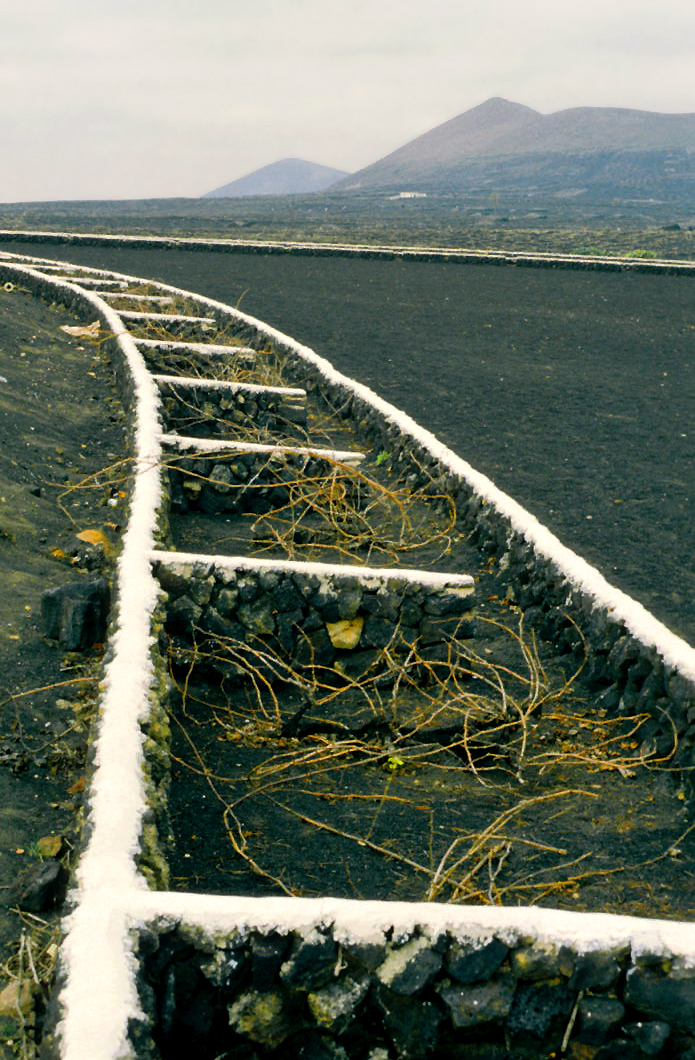
Put the two images side by side and the pleasure lies in the difference. In the first, each curve reads as a separate enclosure. In the second, a single continuous trench serves a succession of plants. Both bring the growing wood down out of the wind. Once you have noticed the straight version, the landscape along the wine road becomes much more interesting than a search for the most symmetrical field.
From a name in the gravel to a press in the cellar
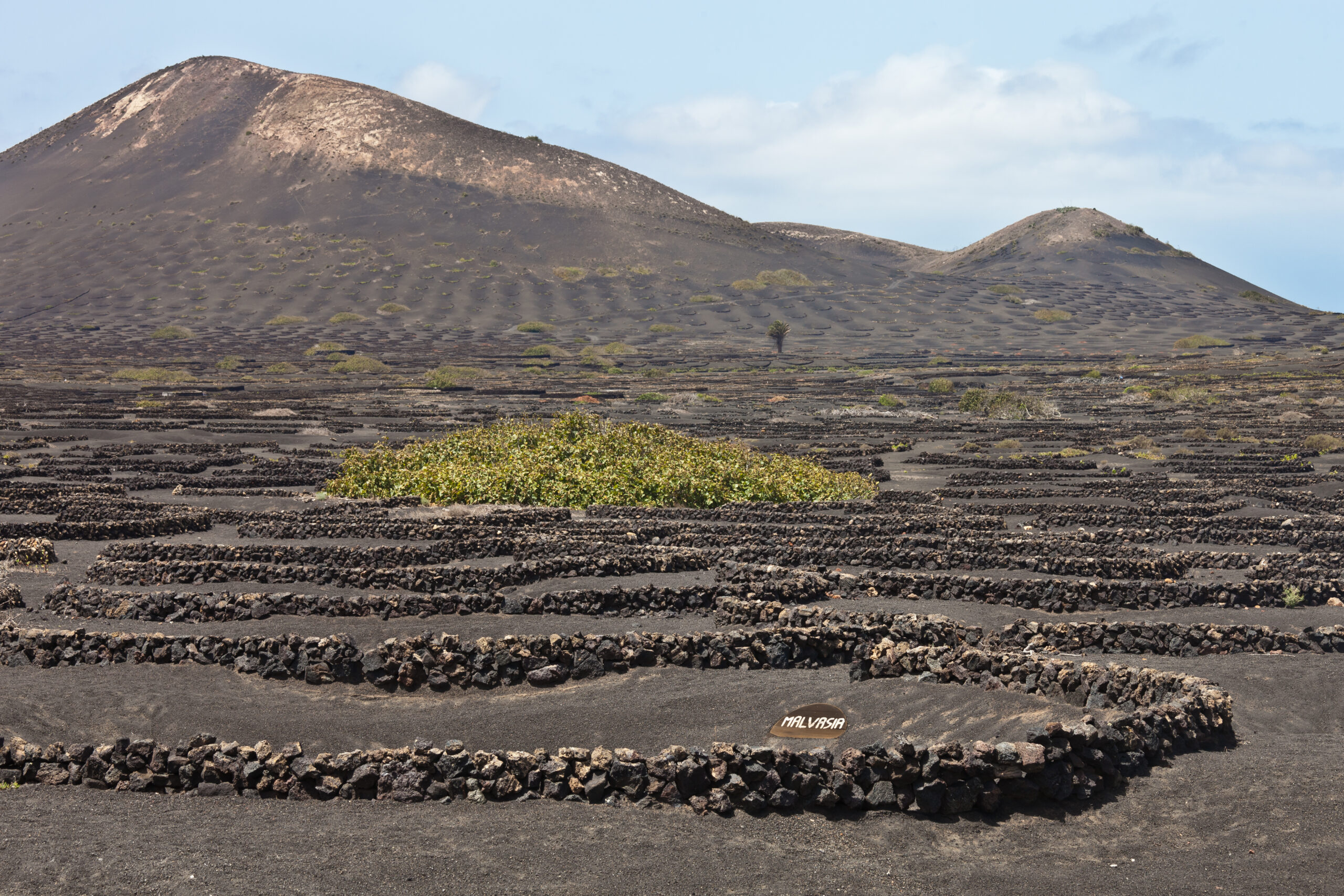
At Diama, a photograph by Luis Miguel Bugallo Sánchez supplies a detail easily missed in the sweep of the hillside. Inside the nearest wall, a small sign says “Malvasía”. The letters are just visible against the gravel. Malvasía Volcánica is the island’s signature white grape, but it shares Lanzarote’s vineyards with other varieties, among them Listán Negro and Diego. A wall tells you something about how a vine is grown; it cannot tell you which grape you are looking at.
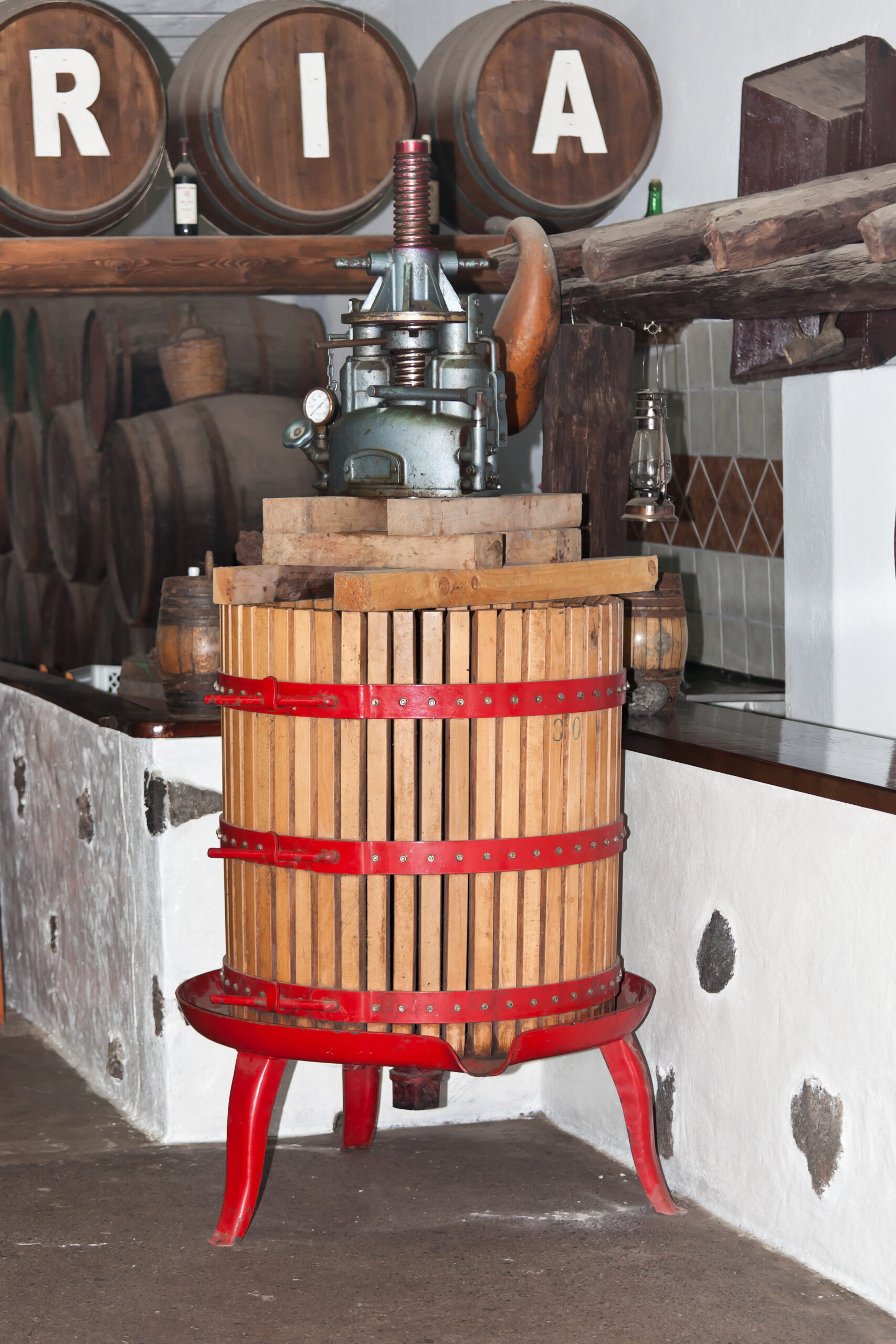
The same photographer took his camera indoors at Bodega Suárez. A wooden basket press stands in front of barrels, its vertical staves held together by bright red hoops. It makes a fitting last frame. Outside, the repeated unit is a stone enclosure; inside, it is a wooden stave. The press is also a reminder of what the landscape photographs leave out: these fields exist to produce grapes, picked by hand, that still have to be brought in from the hollows.
Seeing La Geria in November
The island’s wine route runs inland between the Monumento al Campesino and Uga. Choose a stop that gives you two views: a broad one across the fields, then a closer look from a visitor path or a winery that admits visitors. Stay on the designated route; the black slopes between the vines are cultivated ground. If the cellar matters to your visit, check its opening arrangements before setting out.
November is a good time to make the structure of the vineyard the subject of the trip. The harvest is a summer event; the stonework is there to read long afterwards. Look first at the height of a single vine against its wall, then at the direction its neighbours face. By the time you lift your eyes to the hills, the pattern in that 1993 photograph has a practical explanation.
Details checked 10 November 2026. For help planning a visit, ask Diana about La Geria.
 English


